Student Government leaders advocate for students’ needs to administration, faculty,
staff, and community leaders. Representatives from Student Government sit on boards
across campus for matters pertaining to academics and student life.
Current Representation
Student Government leaders advocate for students’ needs to administration, faculty,
staff, and community leaders. Representatives from Student Government sit on boards
across campus for matters pertaining to academics and student life.
The committee shall review and monitor admissions decisions and the academic performance
of all student-athletes by regularly receiving appropriate and relevant information
regarding the academic eligibility and progress of student-athletes, including graduation
rates. -- Student Rep Name
This committee serves to mediate any disputes between students or faculty and local
bookstores whose primary purpose is to serve the university community. -- Student Rep Name
This committee shall consider, and recommend to the faculty, action on all requests
for new or revised curricula leading to any formal recognition other than graduate
degrees or first professional degrees in law, medicine and pharmacy. The committee
shall also consider, and recommend to the faculty, action on all requests for the
institution, modification, or deletion of courses and of any prescribed programs of
study that do not fall within the purview of the graduate faculty. The 9 committee
shall review the various university curricula with special attention to duplication
or obsolescence of courses. -- Student Rep Name
The Faculty Senate Information Technology Committee provides a faculty voice in assessing
and planning Information Technology (IT) services, resources, and infrastructure for
administration, instruction, and research at the University of South Carolina. -- Student Rep Name
This committee shall initiate studies, make recommendations to the faculty and administration
on enhancing the practice and status of teaching, and review distributed learning
course proposals for compliance with best practice benchmarks as defined by the university
and accreditation bodies. The committee shall then recommend compliant distributed
learning course proposals for approval.
This committee shall consider matters concerning university academic requirements,
standards, policies, and practices. It shall review changes proposed by colleges and
shall make recommendations to the appropriate faculty or the Faculty Senate.
The Ada B. Thomas Outstanding Faculty/Staff Advisor awards recognizes one faculty
and one staff member each year who offer quality advising to undergraduate students.
This committee is charged to consult with university offices on proposals for new,
revised and repealed policies to consider whether they are necessary and aligned with
institutional mission, goals and priorities; that policies are concise, consistent
in format and scope, and easy to understand; to identify constituencies and other
policies that may be affected; and to make recommendations to appropriate offices.
The PAC also assists with dissemination and sharing feedback regarding policies.
The Provost’s Advisory Committee on Women’s Issues (PACWI) serves as an advocate for
women faculty, staff, and students at the University of South Carolina in order to
1) assess current policies; 2) recommend new policies and procedures; 3) focus on
areas that need improvement; and 4) provide opportunities to enhance the quality of
the USC campus community.
The Affirmative Action Advisory Committee is a standing University Committee that
is appointed to advise the President, the Executive Assistant to the President for
Equal Opportunity Programs, and other key administrators on matters relating to equal
employment opportunity and affirmative action efforts and achievement.
The President’s Diversity and Inclusion Advisory Committee’s (DIAC) mission is to
advise the University of South Carolina President on diversity, inclusion, equality,
and equity. This is a broadly representative and deliberative Presidential advisory
group concerned with the representational and equity aspects of diversity and the
development and maintenance of working, living, and learning conditions that support
the work and development of ALL students, faculty, and staff. As a university-wide
committee operating at the Presidential level, DIAC serves as the coordinating committee
for all other diversity/inclusion-related organizations on the USC Columbia campus,
from whom it may from time to time request reports or representations. The operations
of the DIAC shall at all times be inspired and informed by the tenets of the Carolina
Creed.
The committee recommends to the President the name of a faculty member to be considered
for the Michael J. Mungo Distinguished Professor of the Year Award, given for outstanding
teaching at the undergraduate level.
The Committee will provide leadership, coordination, and advocacy to develop and evaluate
programs, initiatives, policies, services and strategies to improve the chemical safety
and security at the University of South Carolina. Reporting: The committee shall provide
an annual risk assessment to the Enterprise Risk Management Oversight Committee via
the Research Safety and Compliance Oversight Committee. This risk assessment will
identify the various risks associated with chemical related research and associated
activities, and will list the major controls in place or being implemented to mitigate
these risks.
The IACUC is charged with the review of the care and use of all vertebrate animals
in research and teaching, submission of reports to the appropriate governing body,
review and inspection of animal care facilities and programs, and review of concerns
involving the care and use of animals at the University of South Carolina.
The Institutional Biosafety Committee (IBC) provides local review and oversight for
research involving recombinant or synthetic nucleic acid molecules. The IBC determines
that research conducted at or sponsored by the university is in compliance with the
NIH Guidelines for Research Involving Recombinant or Synthetic Nucleic Acid Molecules
(NIH Guidelines). The committee members assess the safety of research protocols subject
to the NIH Guidelines and identify any potential risk to workers, other persons, or
the environment. The University’s IBC also reviews biosafety protocols to assess safe
work practices for research involving some other types of biological hazards.
The committee seeks to preserve the historic character of the buildings and landscape
features of the Horseshoe and makes recommendations for maintaining and enhancing
its historic appearance.
The committee advises and makes recommendations to the President of the University
on issues related to the operation of the PE Center.
The Board provides oversight and governance of all student organizations affiliated
with Garnet Media Group; The Daily Gamecock, Garnet & Black, WUSC, and SGTV. Grievances,
annual budgets and policy changes must be viewed by the Board.
The Committee addresses and advises the University administration concerning accessibility
issues on campus. Its goal is to ensure fair and equal access to all university resources
for students, faculty, and staff who have disabilities.
The committee is responsible for considering the health and wellness issues of the
University community. While a primary focus of the committee will address health and
wellness services for students, the committee should also concern itself with similar
issues for faculty and staff when doing so is in the best interests of the learning
and research campus environment. The committee may make recommendations to the appropriate
university leadership on issues affecting health and wellness issues within the campus
environment.
The Commission selects the University’s most outstanding service, leadership and academic
awards.
The committee selects the winner of the University's annual Outstanding Advocate for
First-Year Students.
The purpose of Preston Residential College’s Advisory Committee (Community Education
Team) is to foster a shared vision and responsibility for the design and implementation
of Preston as a living and learning community. Preston Residential College’s Advisory
Committee reviews community assessment, strategic plans, and supports the design of
Preston as a living and learning community.
The Religious Affairs Committee oversees the religious life programs on campus and
makes such recommendations to the President as may be appropriate; 1) make recommendations
to the President on formal petitions for recognition of campus religious workers submitted
by denominations, religions, and other religious groups; 2) receives annual reports
form recognized religious workers on campus and publishes the list of such worker
annually; 3) receives complaints concerning recognized religious worker, determine
if the University regulations have been violated, and recommend remedial or other
disciplinary actions, including revocation of recognition, if required.
The committee hears appeals from administrative decisions determining eligibility
or lack thereof for payment of tuition at residence rates.
The committee oversees the policies associated with general University scholarships.
It also hears reports from the financial aid staff on all phases of financial aid
administration. The committee delegates subcommittees to hear student appeals. These
appeals are generally associated with students who are failing to meet the University's
policy for maintaining a General University Scholarship, as well as appeals regarding
athletic grants in-aid when necessary.
This committee shall provide advice to the Director of University 101 Programs on
issues concerning curriculum, faculty recruitment and development, and policies. The
committee shall also serve as the hearing committee for student grievances and petitions.
In addition, the committee shall review and approve new courses as necessary.
The purpose of the Veterans Student Services Advisory Committee is to gather information
relative to the interests or needs of current or prospective veteran students, and
to make recommendations for improving or expanding services for or policy related
to veteran students at the University of South Carolina.
This committee will provide campus leadership, coordination, and advocacy in the development
and evaluation of appropriate programs, initiatives, policies, services and environmental
strategies to maintain and improve Transportation Services and Parking Facilities.
Initiatives
Student Government's mission is to serve the student body. One way we do this is through
our initiatives, inspired by our strategic priorities that seek to advance the university
and continue to enhance the student experience.
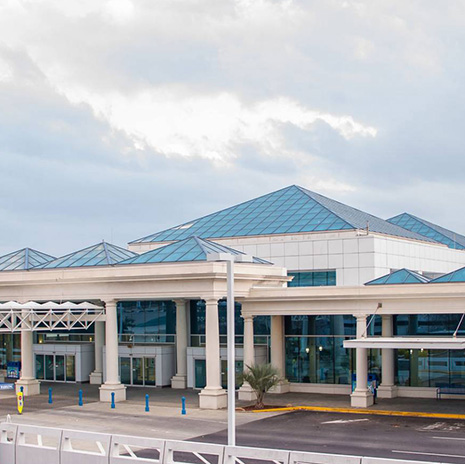
Airport Shuttle
Student Government partners with the University of South Carolina Parking and Transportation
services to provide a shuttle from campus to the Columbia Metropolitan Airport. The
shuttle will operate during fall break, Thanksgiving break and spring break. Reservations are required. Reservations will close the Friday before departure and return dates. The bus will
only wait five minutes before departing.
Use a multilink list to describe a series of items that each need to link to more
than one source for further information. In the links column, carefully edit the link
and change the text of the appropriate bullet, based on your type of link. Each bullet
produces and displays a button with a corresponding icon.
Student Government advocates to the university administration and local, state, and
federal entities to express the needs for the student body.
Local Advocacy Bureau
The Local Advocacy Bureau (LAB) serves as the voice of the University of South Carolina’s
student body to the local government. The commission researches the most critical
issues pertaining to students and addresses the City of Columbia and the University
of South Carolina officials to find better solutions to social, campus, and safety
issues.
Read LAB’s 2026 Report here.
State Advocacy Bureau
The State Advocacy Bureau (SAB) serves as the voice of the University of South Carolina’s
student body to the state government. The board researches the most critical issues
pertaining to students and engages with South Carolina’s General Assembly and Governor’s
Office to find better solutions to academic, financial, and social issues.
Read SAB’s 2026 Report here.
Federal Advocacy Bureau
The Federal Advocacy Bureau (FAB) serves as the voice of the University of South Carolina’s
student body to the federal government. The board researches the most critical issues
about students and addresses South Carolina’s Congressional Delegation to find better
solutions to academic, financial, and social issues.
Read FAB’s 2026 Report here.
Challenge the conventional. Create the exceptional. No Limits.